
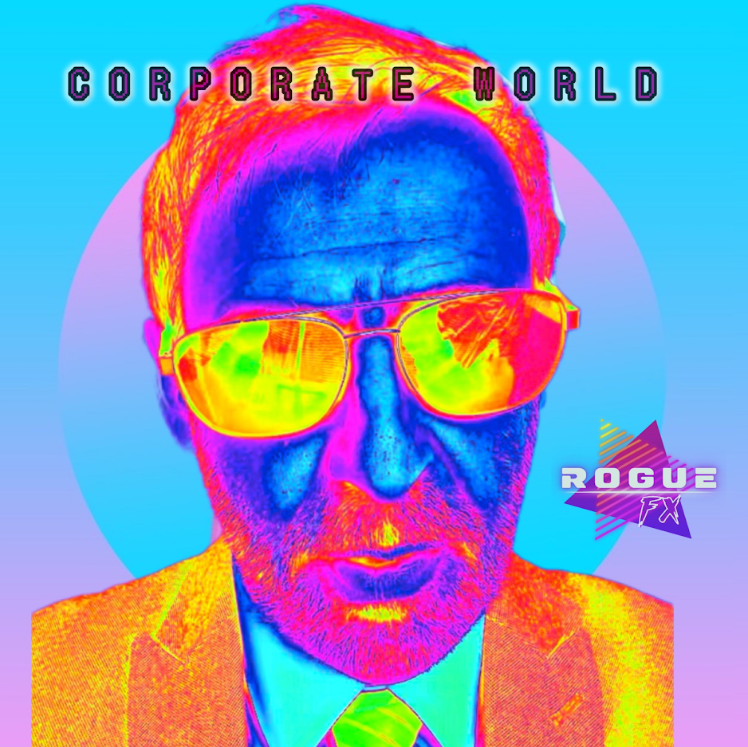
The everyday madness of office life, bank balances and the never-ending pursuit of success is given its own soundtrack on ‘Corporate World’. Rogue FX from the north of England takes a look at a society in which so much revolves around numbers, possessions and the next step in one’s career, and weaves these observations into a surprisingly multi-layered piece of electronic pop music. The spirit of the eighties and nineties resonates throughout, though without the album getting lost in nostalgic flashbacks. Blending synth-pop, Italo-disco, nu-disco and the occasional foray into rock, the result is a collection of songs with plenty of energy, driven by distinctive basslines, melodic synths and an increasingly diverse range of instruments. It is precisely the use of guitar, saxophone, electric piano and marimba that brings a certain unpredictability to the otherwise brilliantly arranged productions. Whilst ‘The City Never Sleeps’ and ‘Computer Love’, with their laid-back disco and synthwave vibe, are instantly catchy, ‘Root Of All Evil’ strikes a surprisingly sombre note. Crash, too – a musical response to the daily deluge of news – reveals a more edgy, almost restless side to the project. What began as a loose collection of ideas has, over the course of nine months, developed into an album with a clear thematic coherence. And that is precisely where its strength lies: Rogue FX combines danceable electronic music with a decidedly critical perspective on the mechanisms of our times. Corporate World sometimes sounds like a forgotten production from another era, yet it tells stories that are uncomfortably close to our present day. In the interview that follows, Rogue FX offers insights into the making of the album, the musical decisions and the stories behind individual tracks.
instagram youtube bandcamp spotify
The Interview (with Andrew Wood)
Your previous album Endgame explored the present through a science-fiction-inspired concept, whereas Corporate World seems much more rooted in everyday reality. What prompted this shift in perspective, and did the world around you influence the direction of the new album?
That’s right. With Endgame, there was a science fiction framework around the themes I was exploring. With Corporate World, I wanted to write about things that exist today and affect so many of us, without the sci-fi backdrop. It’s much more rooted in reality and is ultimately a reflection on life in 2026, drawing on some of the cultures, challenges and issues we face in the world.
Corporate World deals with subjects such as money, ambition, power, success and the pressures of working life. How much of the album reflects your own experiences, and how much is an observation of the society we live in today?
It certainly explores all those areas, but for me the key is how they affect life, individuals and relationships in 2026. Themes include greed culture, burnout, poverty and division. I tend to use characters and scenarios to tell the stories, however much of the album is based on observations of society, although myself and my family do experience and are affected by many of pressures and issues explored in the songs. So while it’s not autobiographical, there’s an element of personal experience in there too.
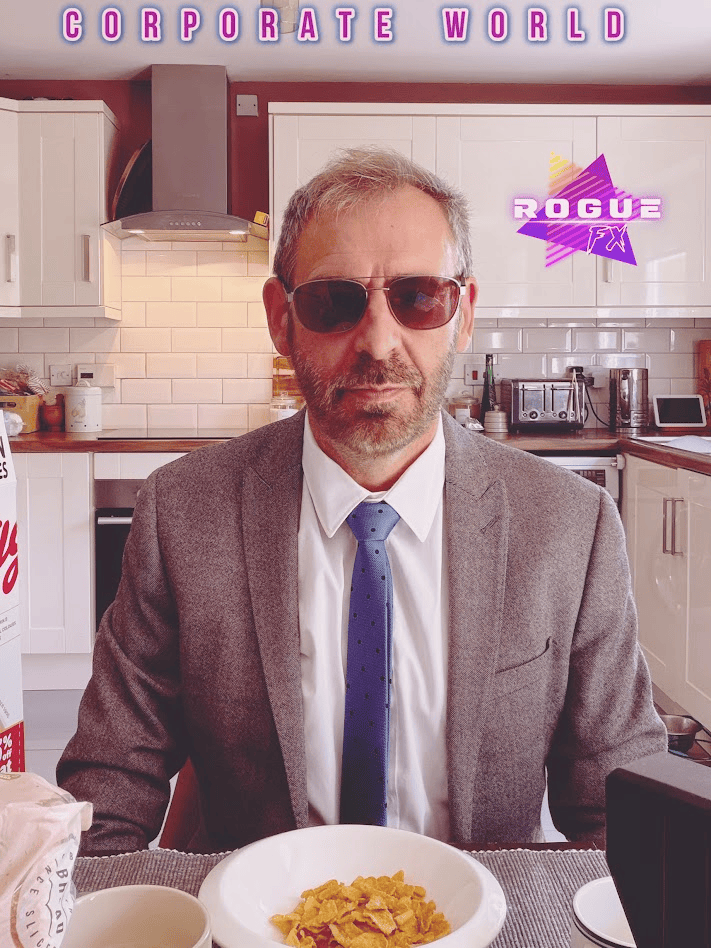
Musically, the album brings together synth pop, nu disco, Italo disco and elements of 80s-inspired synth rock and yacht rock. What draws you to these particular sounds, and how do you balance their nostalgic character with a contemporary production approach?
What I aim for musically, whether the subject matter or the music itself is light or dark, is to have an uplifting aspect , a strong hook that drives the song. I think that’s a common thread running through the genres I love, and music from the 80s and 90s.
I prefer to use a slightly more contemporary production as im keen not to simply mirror those decades music but to add something new.
There is an interesting contrast between the album’s often upbeat, melodic and danceable arrangements and its more serious themes of loss, financial pressure, and the pursuit of success. Was this contrast intentional, and do you think music can sometimes communicate difficult subjects more effectively through an uplifting sound?
I definitely think music has the power to communicate a message to listeners. Songs with a story, theme or message were much more commonplace in previous decades, and perhaps we’ve moved away from that a little, maybe through fear of dividing listeners. For me, there’s still a place for it. Art and creativity can be a great way of addressing subjects that matter.
I also like to bring an element of humour in places, which I think is perhaps a bit of a British trait. The Cost Of Loving is a good example of that attitude – sometimes, if you don’t laugh, you’ll cry!
The uplifting nature of the music isn’t necessarily there to mask the message, but to help communicate it, bringing an element of hope to what can be quite dark subjects. I naturally gravitate towards uplifting melodies and arrangements anyway, which comes from my love of the genres and musical decades that have influenced me.
In a world where professional achievement, financial status and productivity often define how people measure their worth, what does success actually mean to you personally? Has making Corporate World changed the way you think about ambition and achievement?
My daytime life is typically corporate, so I’ve experienced many of the goals, ambitions and situations I talk about in the songs. I’m also far too well versed in annoying corporate jargon so had some tongue in check fun scattering a selection across a few tracks, adding a little bit of satire and a sprinkle of personality.
My own definition of success has probably changed as I’ve got older, although achieving goals and seeing things through is still satisfying. I prefer to look for a win-win outcome, where success is shared rather than achieved at someone else’s expense. That’s quite different from some of the characters on the album, who are much more focused on a more self centered success at all costs.
Musically, success means reaching an audience who listen to and enjoy what I create. First and foremost, I have to be happy with the music myself, and that’s already a form of success. But ultimately, having that wider recognition and knowing people are connecting with and enjoying the music is the greatest reward.
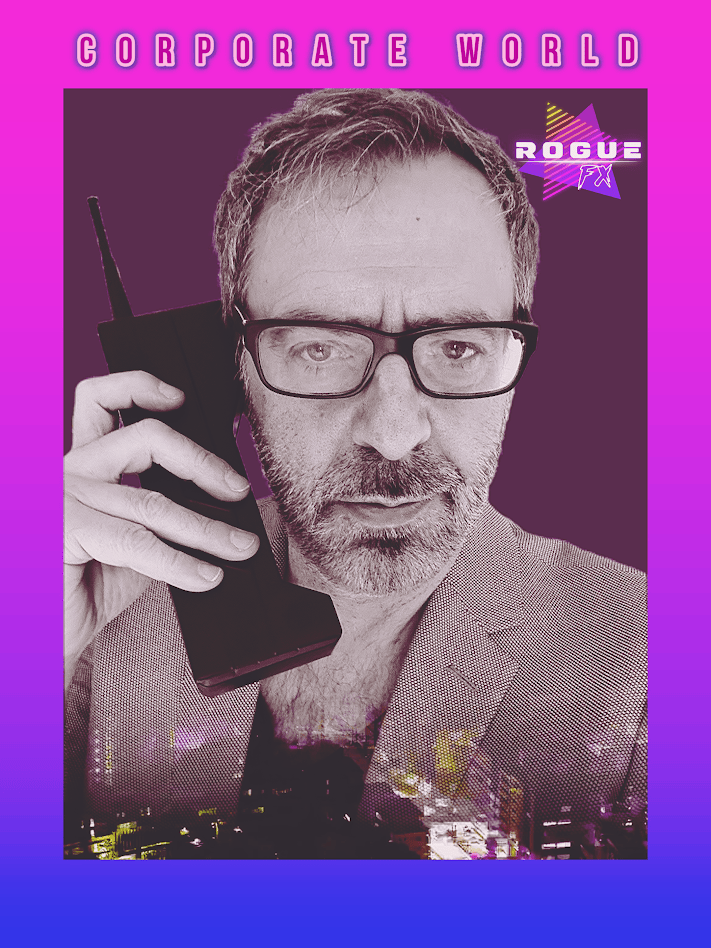
How did the album come together in the studio? Did you start with a clear concept and narrative for Corporate World, or did the individual songs gradually reveal a common thread? Were there any particular tracks that challenged you or took an unexpected direction during production?
The album actually came about almost by accident. I’d remixed my track Filofax, which explored themes of ambition, greed and the pursuit of success through a more 80s inspired lens. That gave me the idea to widen the concept, keeping those 80s and 90s musical influences alive but looking at work, life, society, economics and even politics right here and now in 2026.
I brainstormed around twelve potential track titles that I felt fitted the concept, then started writing songs based on those titles and the themes I wanted to explore. The whole album took around nine months, from January to September 2026, and I pretty much dedicated that time to the project.
Several tracks took unexpected turns along the way. Root Of All Evil developed a slightly gothic feel that I hadn’t originally anticipated, while Crash, which explores the constant stream of bad news we’re exposed to, became one of the most electro sounding tracks on the album.
One of the biggest changes from my previous work was that I kept reaching for more natural sounds. That meant more natural bass and drums, but also bringing in more guitar, saxophone, electric piano and even marimba than I’d used before. I felt these elements worked really well and gave the album a glossy feel while allowing it to breathe across different musical genres.
I also collaborated less than on previous albums, and that was quite deliberate. I wanted to tell these stories personally and maintain a consistent thread throughout the record. But I was very happy to work with Hollywood Brown on a couple of tracks who provided guitar excellence and UFO 1982, who was absolutely instrumental in bringing Computer Love together.
With the album arriving on 6 November in digital and limited physical formats, what are your hopes for its reception? And looking ahead, do you see Rogue FX continuing to explore socially relevant concepts, or are you already drawn towards a completely different musical or thematic direction? And last but not least, which tracks on the album are your personal favourites, and is there a particular reason why they stand out for you?
I’ve added some limited edition physical formats because I still love the idea of people buying and cherishing a physical copy of an album. For me, it’s still one of the best ways to experience music. I can’t resist a cassette release, it’s the ultimate retro musical pleasure!
I’m incredibly proud of the album and believe it’s the best work I have produced so far.I am hoping that it reaches an audience who enjoy it and explore its themes and messages over repeat listens. I almost wish I had a time machine so I could go back and release it in the 80s, as I think it would have fitted that decade so well!
I can definitely see myself continuing to write about social issues, although not exclusively. It’s fun to explore lighter subjects too, but ultimately songs with stories, meaning and interesting characters are where my heart lies.
As for favourite tracks, I still have several. The City Never Sleeps really sets the scene for the album, with its synth pop into disco sound, Computer Love, with UFO 1982, is the fun, synthwave banger that explores virtual obsession but the darker tracks, particularly Root Of All Evil, The Place That I’m Going To and Crash, are the ones I’m really vibing with at the moment. They’re also perhaps an indication of where I see Rogue FX heading next – darker bangers!
Entdecke mehr von NENESBUTLER
Melde dich für ein Abonnement an, um die neuesten Beiträge per E-Mail zu erhalten.
